01 / PICK LINES
Choose a network
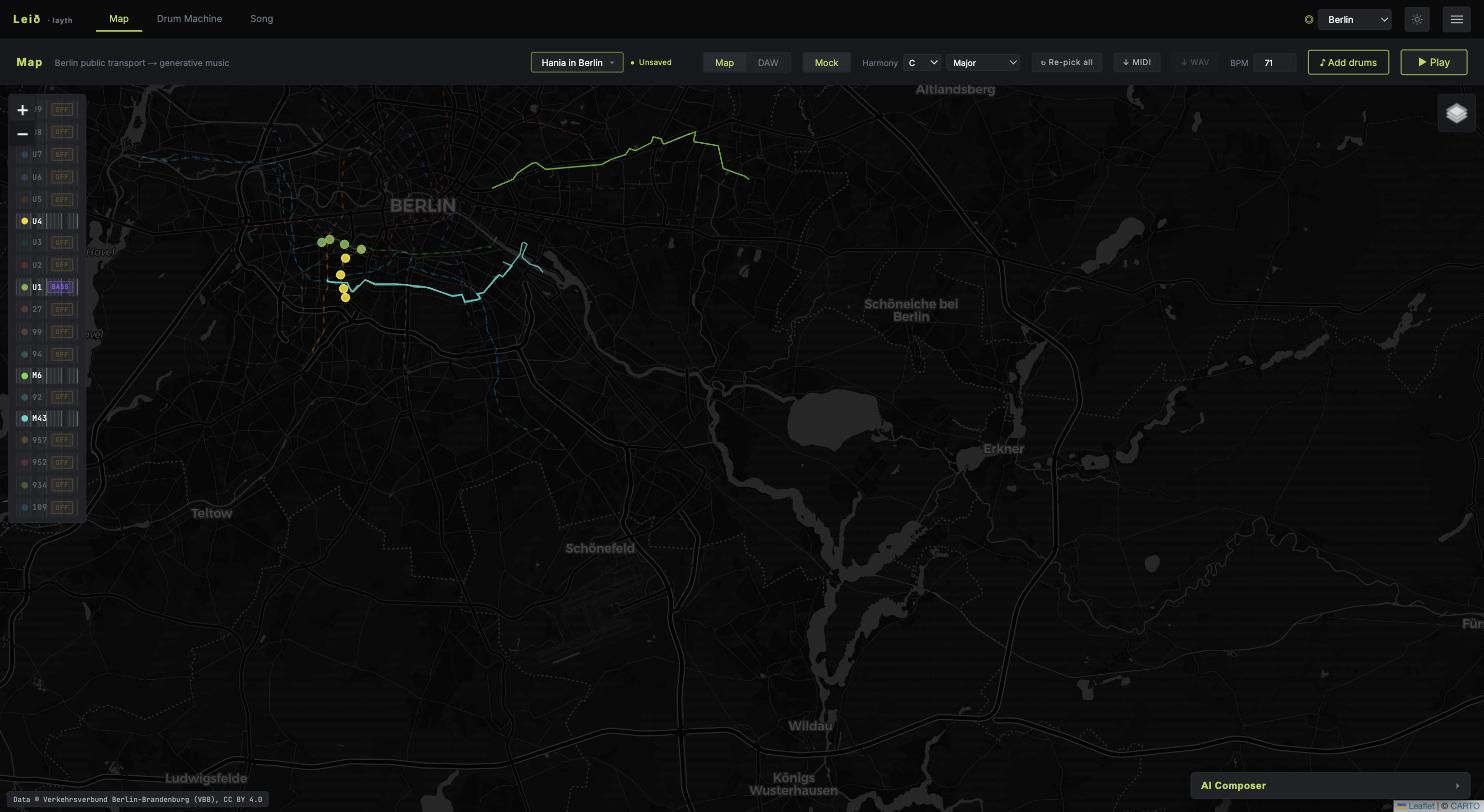
Metro, tram, trolley, bus, and suburban rail from seven cities. Each line you add becomes its own lane, coloured the way the city colours it.
Deetta Labs presents / a browser DAW for the city
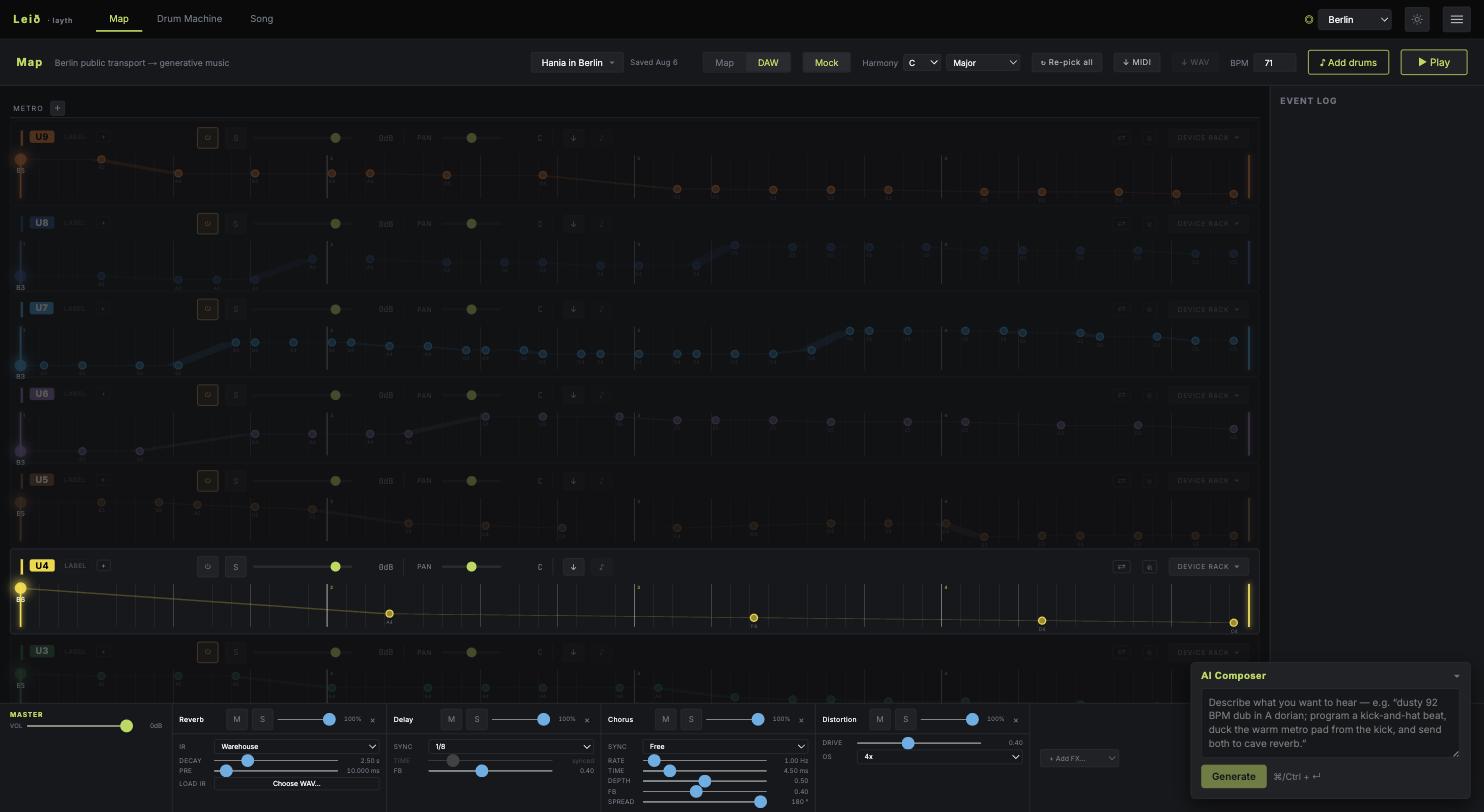
Layth reads a public transport network the way a DAW reads a session. Every line is a track, every stop is a note, and the map you commute across turns out to be a score somebody forgot to play.
01 / How it works
Nothing here is random noise dressed up as data. Layth builds each song from a city’s actual routes, stops, geography, and service patterns—then hands you a mixer and gets out of the way.
01 / PICK LINES
Metro, tram, trolley, bus, and suburban rail from seven cities. Each line you add becomes its own lane, coloured the way the city colours it.
02 / PLAY THE MAP
Latitude picks the scale degree, longitude picks the octave, so a route's shape on the map is the shape of its phrase. Busier stops can sit higher.
03 / SHAPE IT
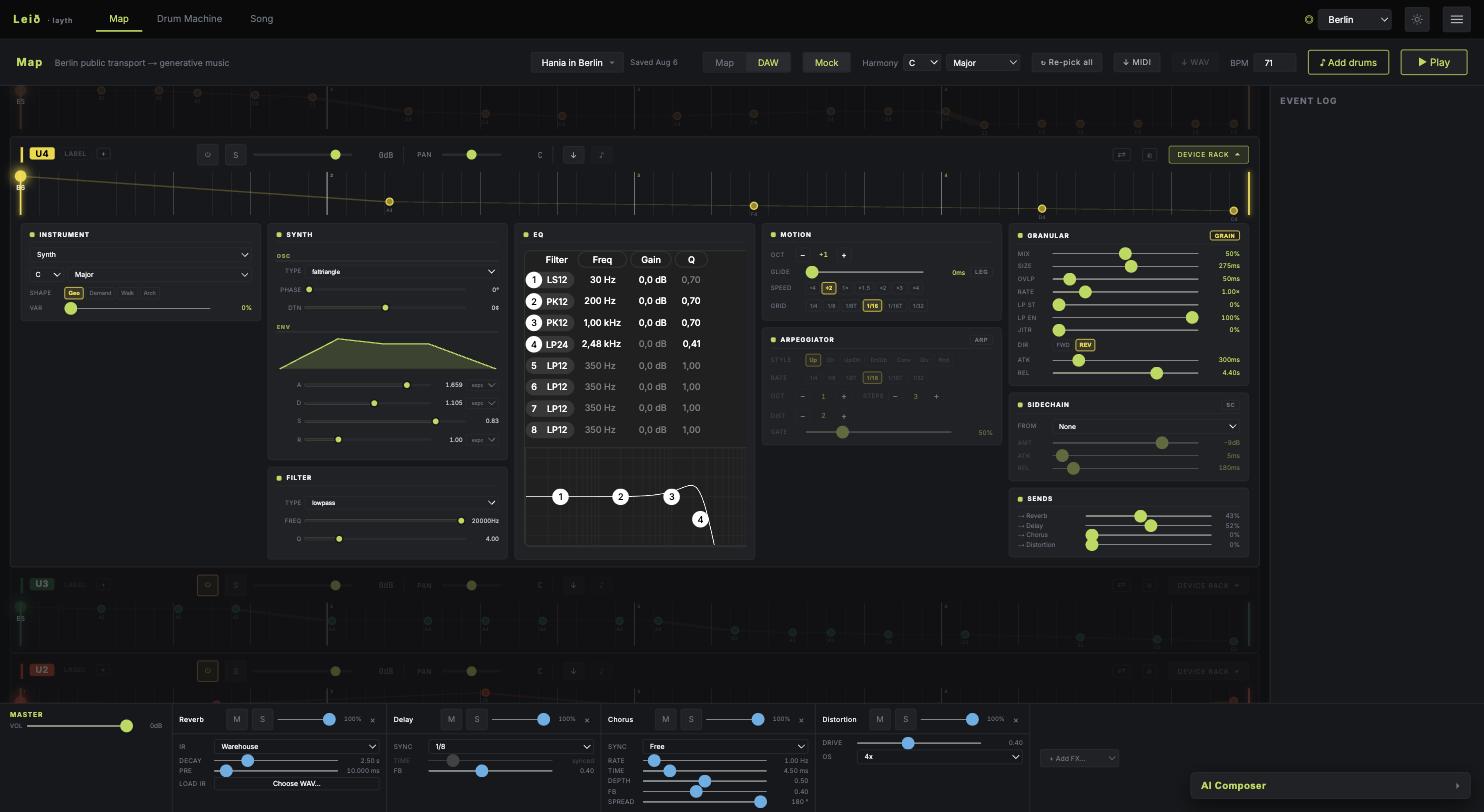
Every lane gets a synth, envelope, filter, eight-band EQ, arpeggiator, granular layer, ducking, and sends. Nothing about it stays generative unless you want it to.
04 / KEEP IT
Write MIDI per lane or for the whole mix, capture real-time WAV stems, save the song to your account, or publish a link someone else can open and copy.
02 / The instrument
03 / Deeper than it looks
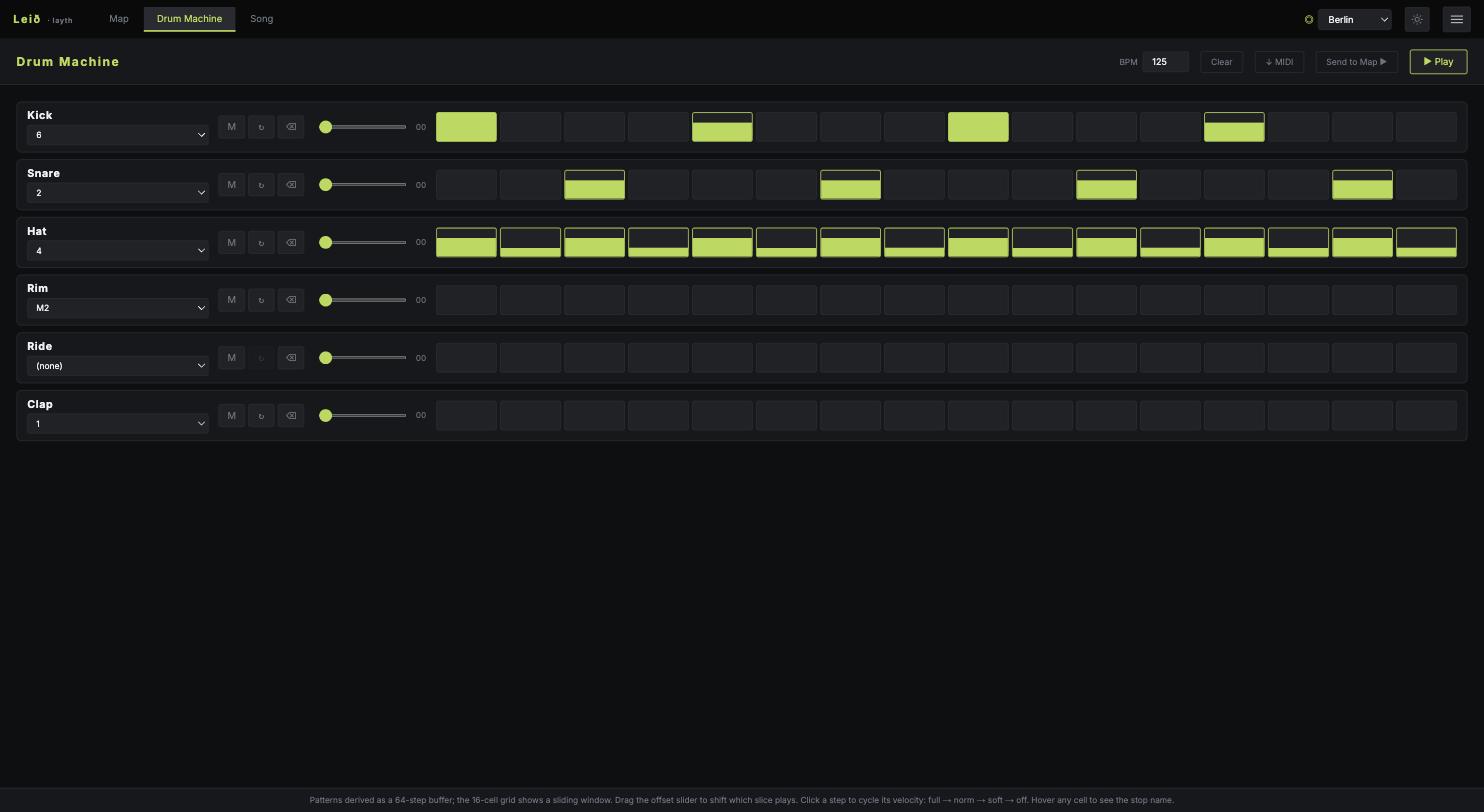
The first play-through is the city’s idea. Everything after that is an arrangement decision: which lines are audible, what they play, how tight the loop is, and what the whole thing turns into on the way out.
04 / Seven networks
A dense radial metro and a sprawling bus grid do not make the same music. Switch city and the whole instrument changes underneath you, because the geography did.
Built on open GTFS transit data published by each city’s transport authority.
No installer, no license key
Layth opens in the browser on desktop or phone. Start free, and make an account only when you want to save a song, share it, or export the take.
Open Layth ↗